How Long Does Naltrexone Take to Work for Alcohol?
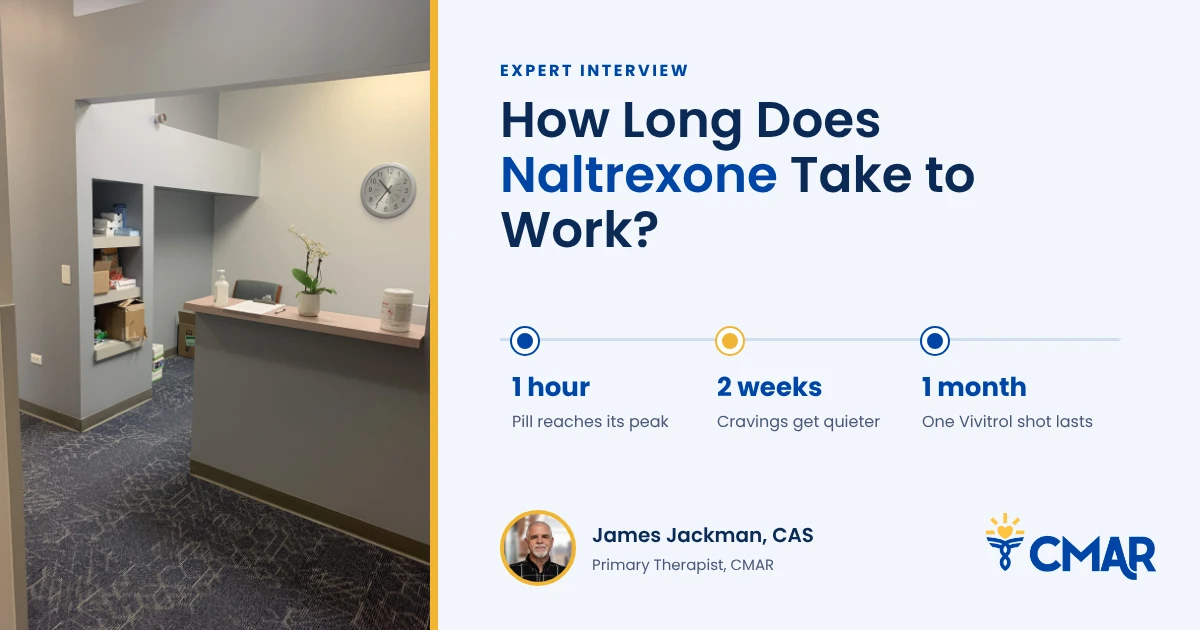
Naltrexone gets to work fast. A pill hits its peak level within about an hour, and the monthly Vivitrol shot within a few hours.
Quieter alcohol cravings, the part most people care about, take a little longer. When the medication is paired with therapy, CMAR addiction specialist James Jackman says “patients usually see rapid results within the first couple of weeks.”
Key takeaways
- A naltrexone pill peaks within about an hour. A 50 mg dose blocks opioids for up to 24 hours.
- Vivitrol, the monthly shot, peaks about 2 hours after the injection and keeps working for about a month.
- Cravings tend to quiet over the first couple of weeks, and drinking feels less rewarding.
- Naltrexone works best alongside therapy, not as a stand-alone fix.
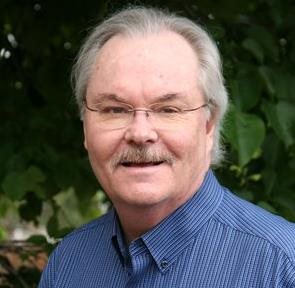
James is a Certified Addiction Specialist who has worked in addiction treatment in Colorado since 2015. Everything he says below comes from our October interview with him.
How Long Does Naltrexone Take to Work?
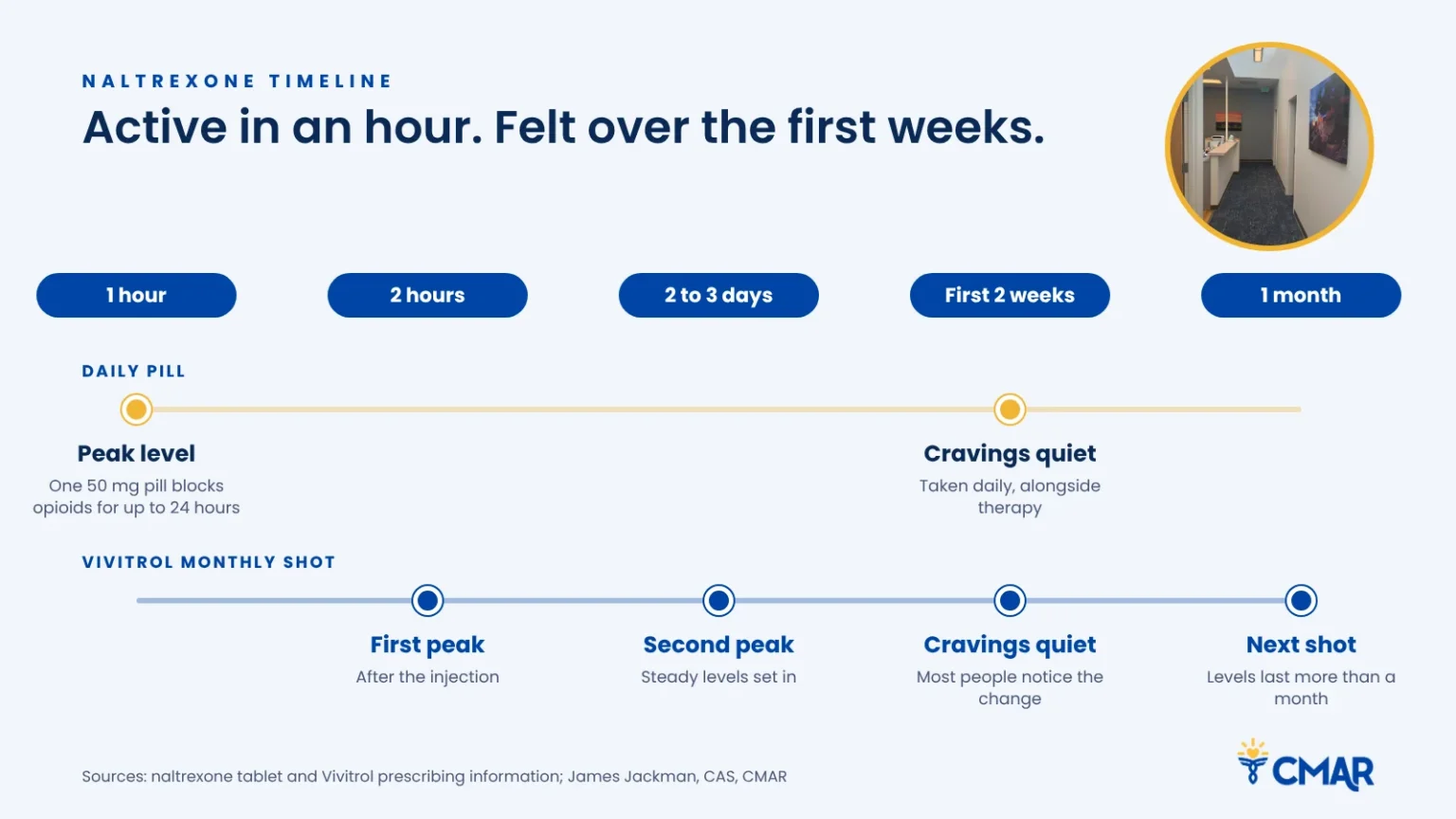
Naltrexone starts working on the first day. A pill reaches its peak level within about an hour, and the monthly Vivitrol shot peaks about 2 hours after the injection. The effect on cravings builds more slowly: most people notice quieter cravings within the first couple of weeks, especially with therapy.
Here is the timeline from the naltrexone tablet prescribing information and the Vivitrol prescribing information:
The first hour
A naltrexone pill reaches its peak level within one hour. A 50 mg dose blocks the effects of opioids for up to 24 hours, which is why the usual alcohol dose is one pill a day.
The first few days
With Vivitrol, the first peak comes about 2 hours after the shot and a second one 2 to 3 days later. From there, the medication stays in your system for more than a month.
The first couple of weeks
This is when most people notice the difference: cravings get quieter, and drinking feels less rewarding.
How Does Naltrexone Work for Alcohol?
Naltrexone blocks the opioid receptors in the brain, which seems to take some of the reward out of drinking. People notice “a moderate to significant decrease in craving,” James says, and if they do drink, alcohol “is not as rewarding for them as it was before.”
Even the label admits the exact mechanism for alcohol “is not understood.” Naltrexone is also nonaddictive, according to NIAAA, and the label notes it does not lead to physical or psychological dependence.
What the First Weeks on Naltrexone Feel Like
Most people describe the first weeks as quieter rather than dramatic: fewer cravings, less mental noise around alcohol and mild side effects that fade. Patients often put it this way:
Side effects tend to be mild. On the pill, the most common are nausea, headache, dizziness and tiredness. With Vivitrol, nausea and soreness or swelling where the shot was given are most common, and James says these “decrease over time, and they’re manageable, they are tolerable.”
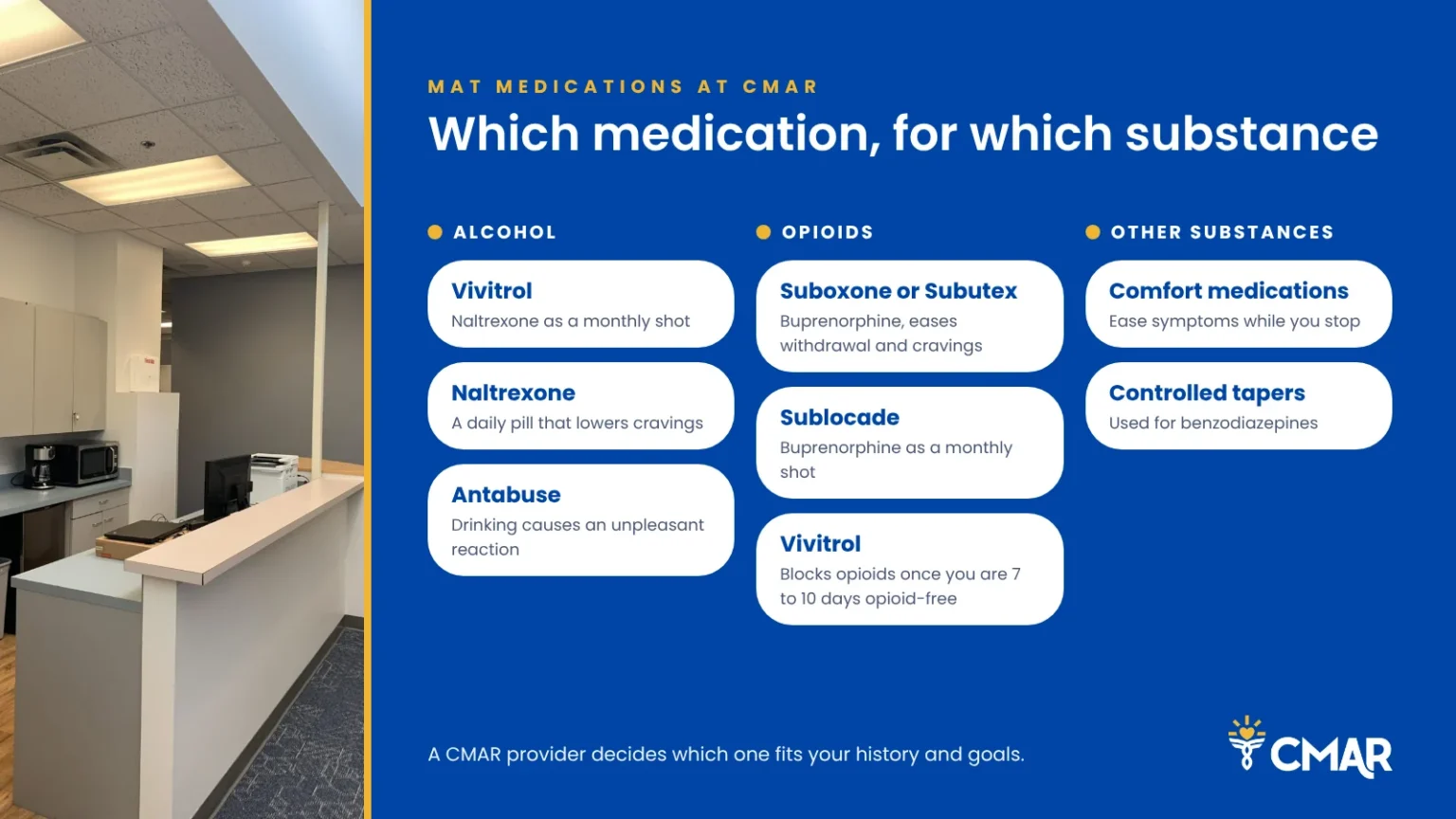
Naltrexone also does not make you sick if you drink, unlike Antabuse. Our guide to drinking while taking naltrexone explains why that still isn’t a green light.
Naltrexone Pill vs Vivitrol Shot: How Fast Each One Works
Both forms contain the same medicine and start working within hours: the pill peaks in about an hour, and Vivitrol about 2 hours after the shot. The difference is how often you take it, once a day or once a month, and how steady the level stays.
| Naltrexone pill | Vivitrol shot | |
|---|---|---|
| How often | Once a day (50 mg for most people) | Once every 4 weeks |
| Peak level | Within about 1 hour | About 2 hours, then again at 2 to 3 days |
| How long one dose lasts | Up to 24 hours of opioid blocking at 50 mg | More than a month |
| Given by | You, at home | A healthcare provider |
Sources: naltrexone tablet prescribing information; Vivitrol prescribing information. For people who forget a daily pill, the monthly shot removes that step. Both require being opioid-free for at least 7 to 10 days before starting. See how they compare to another option in Vivitrol vs Antabuse.
Wondering whether naltrexone could quiet your cravings? Ask us on your first call. See how getting started at CMAR works.
What Helps Naltrexone Work Best
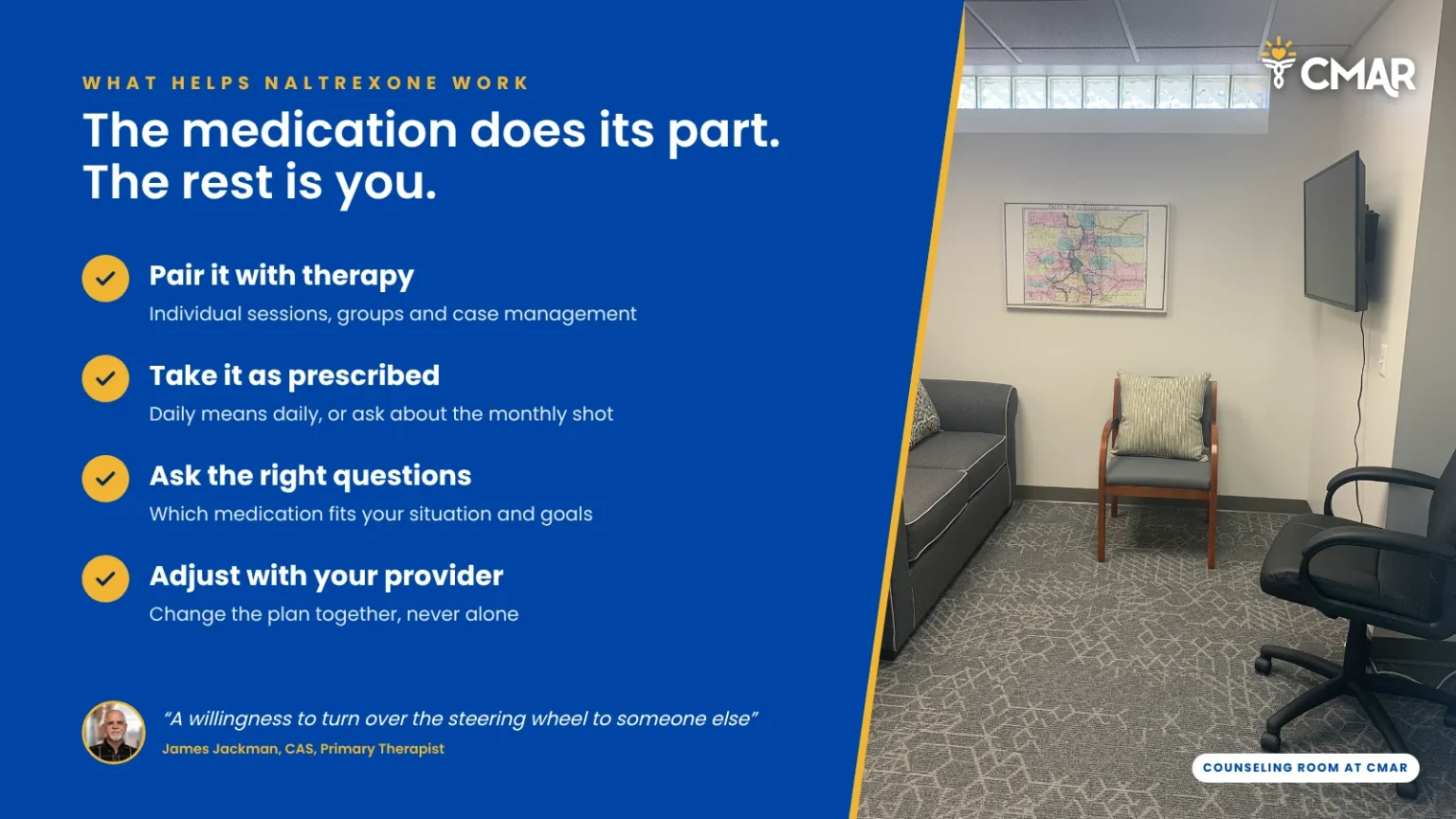
Naltrexone works best with therapy, consistent dosing and a provider who adjusts the plan with you. The medication does its part. The rest comes from what surrounds it, and James puts willingness first:
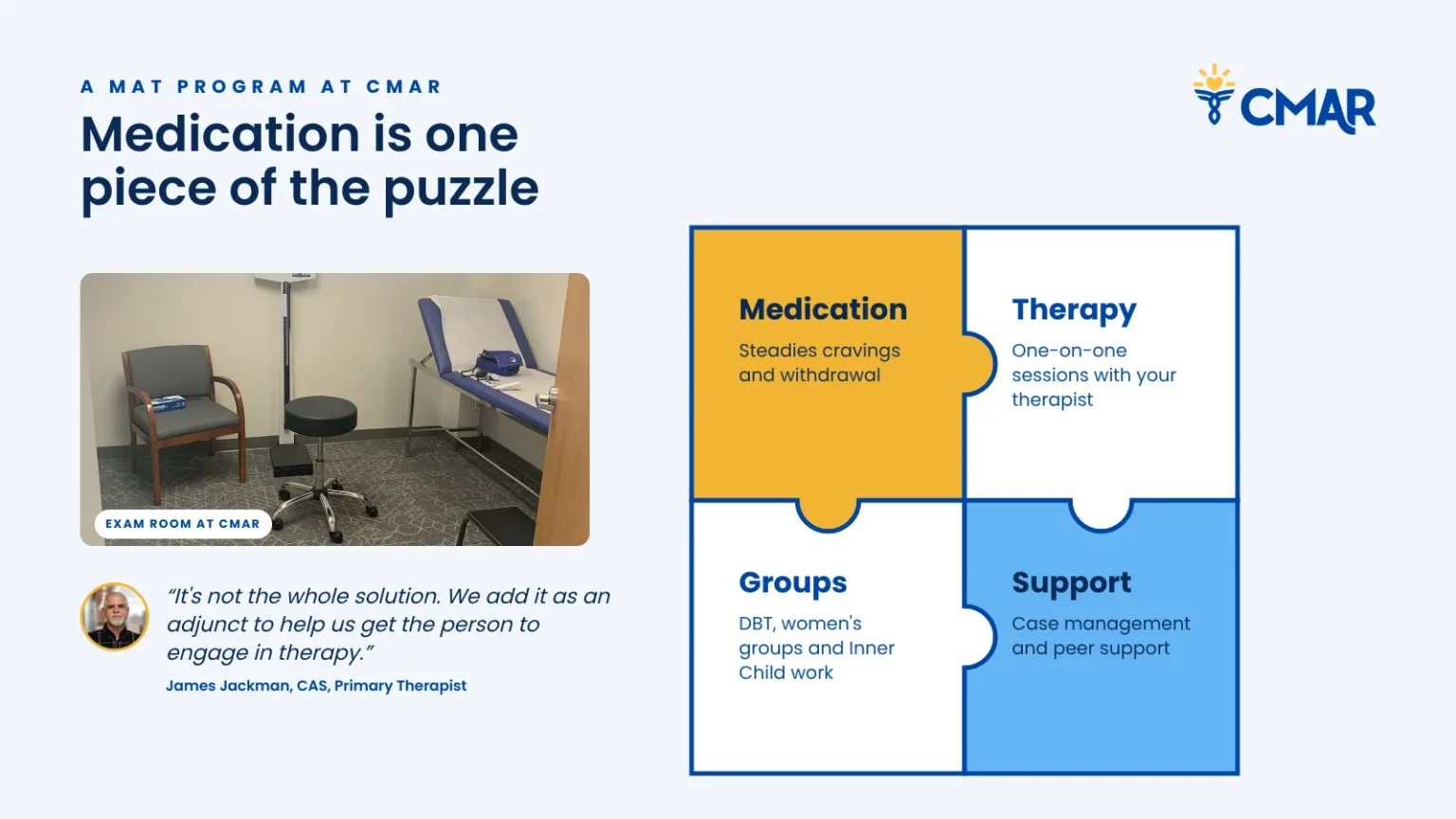
- Pair it with therapy. At CMAR, naltrexone comes with individual therapy, groups and case management, because the medication is “just a piece of the puzzle,” as James puts it.
- Take it the way it was prescribed. A daily pill works when it is taken daily. If that is hard, ask about the monthly shot.
- Ask the right questions first. James suggests asking which medication fits “my particular situation and the goals that I want to accomplish,” plus its side effects and health risks.
- Change it with your provider, not alone. If it isn’t helping, your provider can adjust the plan or try a different approach.
Naltrexone and Vivitrol in Denver at CMAR
If cravings keep pulling you back, naltrexone can take some of that pull away while you do the rest of the work. CMAR offers both the daily pill and the monthly Vivitrol shot through MAT for alcohol in Denver, as part of our medication-assisted treatment with therapy and groups.
Same-day starts are often possible, and we verify your insurance benefits before you come in.
Have more questions first? Our medication-assisted treatment questions post answers the ones we hear most, and our look at how effective medication-assisted treatment is covers the evidence. Call CMAR in Denver at (833) 448-0127.
Frequently Asked Questions
How long does naltrexone stay in your system?
A single 50 mg naltrexone pill blocks opioids for up to 24 hours, which is why it is taken once a day. Vivitrol, the monthly shot, keeps measurable levels in the body for more than a month. Ask your provider how long to wait before any planned surgery or pain medication.
Does naltrexone make you feel high or different?
No. Naltrexone does not produce a high, and its label states it does not lead to physical or psychological dependence. Most people notice quieter cravings rather than a change in mood. Some feel mild nausea, headache or tiredness in the first days.
Can you take naltrexone if you use opioids?
Not while opioids are still in your body. Naltrexone blocks them, which can set off sudden withdrawal. Per the label, plan on 7 to 10 days opioid-free first, and up to 2 weeks after buprenorphine or methadone. Your provider will work out the timing with you before the first dose.
What happens if you miss a dose of naltrexone?
With the daily pill, the opioid block and craving support fade as the dose wears off, so ask your provider ahead of time what to do if you miss one. Using opioids during that gap can lead to a fatal overdose. If daily pills are hard to keep up with, ask about Vivitrol, given once every 4 weeks.
Does Vivitrol make you sick if you drink on it?
No. Vivitrol is not a deterrent like Antabuse, so drinking on it will not make you sick. It blocks the opioid receptors tied to the reward of drinking, so alcohol feels less rewarding and cravings get quieter. That still does not make drinking on it a good idea, so talk it through with your provider.
Who should start with naltrexone or Vivitrol?
For most people who want to stop drinking, naltrexone or Vivitrol is the first medication to try. James calls it the first line “for the overwhelming majority of patients” because side effects are few, and the most common ones with Vivitrol come from the injection and ease over time.
Does naltrexone really work?
For many people it does, and you can find out without committing for life. James tells patients they “have nothing to lose by giving it a shot.” If you see a benefit, you keep going. If not, you can stop and try a different approach with your care team.

Related posts