
Telehealth Login

|

Outpatient Alcohol Detox: What the CMAR Process Actually Looks Like

Are you dreading the idea of checking into a facility just to stop drinking? You don’t have to vanish from your life for weeks. Outpatient alcohol detox lets you safely withdraw while sleeping in your own bed, keeping your job, and maintaining as normal a schedule as you are able to manage with our care.

It’s about data, not guesswork. The clinical reality is that if your medical history is stable and your home environment is supportive, an ambulatory approach is highly effective.

Michael Damioli, CMAR Clinical Director, walks us trough how we ensure your care is driven by your actual symptoms. 

We track your vitals constantly during the first 72 hours. If you’re looking for options, we provide the medication assisted treatment Denver residents trust because we integrate therapy immediately. 

You don’t just clear the alcohol from your system. You learn exactly how to live without it.

The Clinical Framework of Outpatient Detoxification

Many people assume they need a hospital bed to detox safely. This misconception keeps individuals paralyzed and prevents them from asking for professional help. The decision between inpatient and outpatient alcohol detox care doesn’t rely on guesswork. It relies heavily on two specific clinical factors: medical safety and home stability. You don’t have to uproot your entire routine if you meet the right criteria.

I want to know how much someone’s been drinking, for how long, and what happened last time they stopped. Seizures, hallucinations, bad shakes? That history tells me more than what they’re drinking this week.

Determining Medical Eligibility First

When evaluating a patient for an ambulatory program, clinicians look closely at the biological reality of your drinking history. They aren’t judging your character. They’re looking at your physiological baseline.

Key indicators for medical clearance include:

  • Total volume of alcohol consumed daily.
  • Overall duration of your heavy drinking phase.
  • Previous experiences with alcohol withdrawal.
  • History of complicated withdrawal symptoms like seizures.

If your medical picture falls into the mild to moderate category, a hospital stay is likely unnecessary. The first conversation is just about gathering the facts with us at (833) 448-0127 to discuss your drinking history with zero pressure.
The Role of a Stable Home Environment

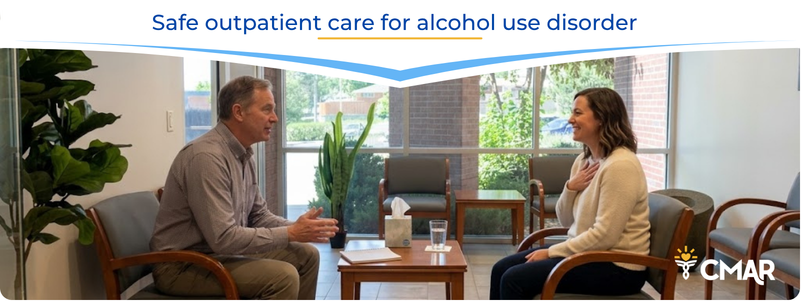
Medical clearance is only half of the required equation for success. A secure home environment is equally critical. You need a safe place to go after your clinic visits conclude, and a supportive family member or trusted friend who can check on you.

If your home life is highly chaotic or includes other active substance users, outpatient detox might not provide enough structure. But if your environment is stable, you can effectively maintain your daily routine with the medication assisted treatment Denver residents need. You keep your work schedule intact while receiving high-level medical oversight.

The Critical 72-Hour Monitoring Window

The most dangerous phase of alcohol withdrawal happens in the first few days. Physical symptoms typically peak within the first 72 hours. During this specific window, clinical monitoring is incredibly frequent. You’re never sent home to simply guess if you’re medically stable.

Tracking the Data

Clinical teams use structured assessments to track your progress and ensure absolute safety. This constant monitoring includes:

  • Checking blood pressure and resting heart rate.
  • Monitoring internal body temperature fluctuations.
  • Using structured clinical scales for tremors and sweating.
  • Tracking acute anxiety levels and overall sleep quality.

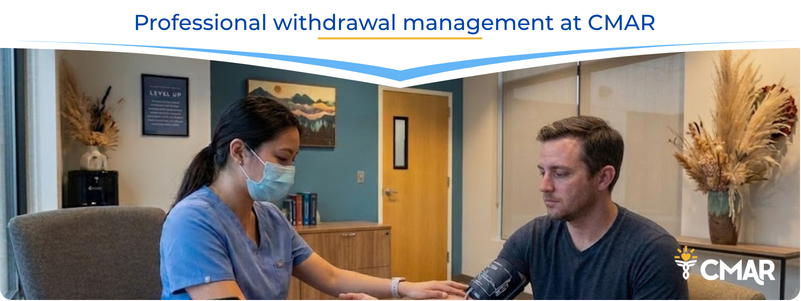
As your vitals stabilize, clinic visits become less frequent. The medical team watches the actual data trends to ensure your nervous system is calming down appropriately. You aren’t just handed a prescription and sent away. You’re actively monitored.

Taking the first step is hard enough without worrying about the cost. Take a moment to check your insurance benefits to securely explore your options.

Daily evaluations for the first 72 hours or so, since that’s when withdrawal peaks… As the numbers settle down, visits space out. Nobody’s guessing at home whether they’re okay. We’re watching the trend.

Modern Approaches to Managing Withdrawal Safely

Alcohol withdrawal causes a highly dangerous nervous system rebound. When you remove a biological depressant after prolonged use, your brain becomes hyperactive. This chemical hyperactivity is what causes shaking, panic, and potentially life-threatening seizures. It isn’t just a bad hangover. It’s a serious medical event.

Symptom-Based Tapering Protocols

To manage this neurological hyperactivity, medical providers utilize a medication taper. Specifically, they use medications that calm the central nervous system safely. This prevents the dangerous biological rebound effect without requiring you to consume alcohol.

The medication acts as a pharmacological bridge. It allows your brain receptors to slowly adjust to the absence of alcohol without sending your body into a state of acute shock.

Individualized Dosing Schedules

There’s no universal medication dosage that works for everyone. Expert clinicians dose directly off your active withdrawal scale, not a calendar. A person with a ten-year daily drinking history requires a completely different starting point than someone struggling for six months.

The medical team adjusts your medication daily based on exactly what your body shows them. If your heart rate elevates, the dosage is modified in real-time. This dynamic clinical approach ensures you remain physically comfortable and secure.
Bridging Detox and Therapy Simultaneously

Detox alone isn’t comprehensive addiction treatment. It simply gets the toxic substance out of your system. Clearing your biology does absolutely nothing to teach you how to cope with life once the alcohol is actually gone.

Moving Beyond Physical Stabilization

Many traditional programs wait until medical detox is complete before introducing behavioral counseling. This delay creates a massive, dangerous gap in care. Sending someone out the door with a medically cleared system but zero behavioral coping strategies is a well-known recipe for immediate relapse. The physical craving might be gone, but the psychological reliance remains entirely untreated.

Simultaneous Mental Health Support

An integrated treatment model introduces therapy while the medical process is actively happening. Before your vital signs fully normalize, a licensed therapist is already working with you. You begin exploring the psychological roots of your dependency immediately.

These early therapy sessions focus on highly practical, functional skills:

  • Identifying environmental and emotional triggers that set off the drinking.
  • Developing immediate, actionable alternative coping mechanisms.
  • Building a structured daily routine for early sobriety.
  • Addressing underlying anxiety or depression that alcohol was actively masking.

By addressing the mind and the body at the exact same time, you build a solid foundation for long-term recovery before the detox phase even concludes.

Most people picture inpatient the second they hear “detox,” a facility, time away from work and family. For a lot of people that’s not what’s needed, and honestly it’s the thing keeping people from calling at all.

Taking the Next Step with CMAR

Most families who call CMAR think the absolute only choice is between doing nothing and committing to a full inpatient hospital stay. Here’s what they actually find out when they speak with our team. A short, confidential phone assessment tells us exactly where you are medically, not where you’re afraid you are.

We match your specific level of care directly to your biological and clinical needs. If your home life is stable, our specialized outpatient program lets you safely break the physical cycle of dependency without vanishing from your family and career.

  • Contact our confidential admissions team to complete a simple medical screening.
  • Our team will evaluate your drinking history to determine if outpatient care is a safe option.
  • Begin an integrated plan where therapy and medical stabilization happen simultaneously.

Clinical Perspectives: What the CMAR Process Actually Looks Like

Here is what the process looks like from the inside, straight from Michael Damioli clinical director.

1. What actually determines whether someone’s a good candidate for outpatient detox versus needing inpatient?

Two things, mainly. Medical safety comes first. I want to know how much someone’s been drinking, for how long, and what happened last time they stopped. Seizures, hallucinations, bad shakes? That history tells me more than what they’re drinking this week. Then there’s the home situation. Somewhere stable to go, someone who can check on them, a life that isn’t working against them. If the medical picture is mild to moderate and home is stable, outpatient usually works fine, and people keep their job and their routine while they do it.

2. What does the monitoring schedule actually look like in the first week?

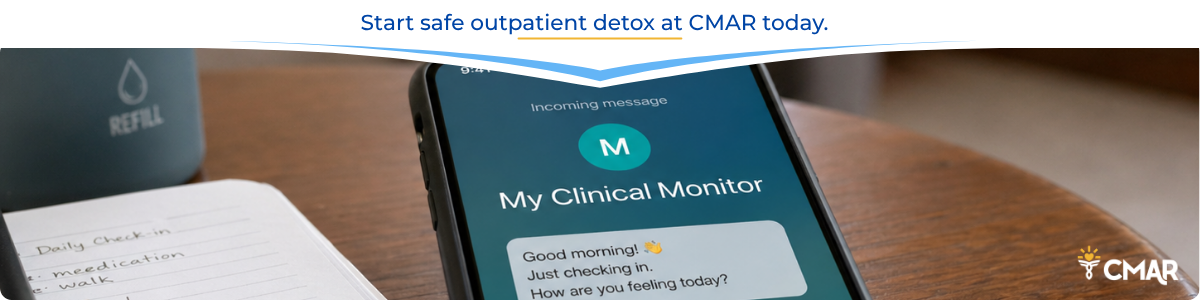
Frequent, especially at the start. Daily evaluations for the first 72 hours or so, since that’s when withdrawal peaks. We check vitals: blood pressure, heart rate, temperature. We track symptoms too, using a structured scale for tremor, sweating, anxiety, and sleep. As the numbers settle down, visits space out. Nobody’s guessing at home whether they’re okay. We’re watching the trend.

3. What medications does CMAR typically use, and how do you decide dosing?

Usually a benzodiazepine taper. That class treats the same nervous system rebound that makes withdrawal dangerous, without needing someone to keep drinking to feel stable. There’s no fixed dose for everyone, though. I dose off the withdrawal scale, not a calendar. Someone with a longer drinking history needs a different starting point than someone earlier in it, and we adjust as we go based on what their body shows us.

4. What makes CMAR’s integrated therapy model different?

Detox alone gets the alcohol out of someone’s system. It doesn’t teach them how to live without it. So counseling starts while the medical piece is happening, not after. A therapist is already working with the patient before the numbers even normalize, on what they reach for instead, what set off the drinking in the first place. Waiting until detox finishes to start that conversation means sending someone out the door with nothing else in place.

5. What’s the biggest misconception patients have when they call?

That they have to be falling apart to qualify, or that stopping means vanishing from their life for weeks. Most people picture inpatient the second they hear “detox,” a facility, time away from work and family. For a lot of people that’s not what’s needed, and honestly it’s the thing keeping people from calling at all. A short phone assessment tells us where someone actually is medically, not where they’re afraid they are.

Frequently Asked Questions

Is outpatient alcohol detox safe?

Yes. Outpatient alcohol detox is highly safe for individuals with mild to moderate withdrawal risks. Medical professionals conduct a thorough assessment of your exact drinking history and previous withdrawal experiences. You receive frequent clinical monitoring and real-time medication adjustments to keep your nervous system completely stable at home.

How long does outpatient alcohol detox take?

The acute medical detox phase typically lasts between three and seven days. Severe symptoms usually peak within the first 72 hours. Your specific timeline depends entirely on your personal drinking history and exactly how your body responds to the medication taper. Monitoring continues until your vital signs consistently normalize.

Can I work during outpatient detox?

Many people successfully maintain their work schedules during an ambulatory detox program. Because the prescribed medication actively prevents severe withdrawal symptoms, you can often function normally. However, you need a flexible schedule for the first few days to accommodate daily medical check-ins and vital sign monitoring at the clinic.

What happens after alcohol detox is complete?

Detox is only the first step in recovery. After the physical withdrawal phase ends, you transition immediately into comprehensive clinical care. This includes ongoing individual therapy, group counseling, and psychiatric support if needed. Continuing treatment is necessary for learning how to manage emotional cravings and prevent future relapses over time.

What Is Outpatient Detox?

Outpatient detox is safe for individuals with mild to moderate alcohol dependence who have a stable home environment and no history of severe withdrawal complications. When researching “what is outpatient detox”, you’ll find it involves medical supervision and medication-assisted treatment in Denver to manage symptoms while you live at home. 

This approach allows you to maintain your professional and personal responsibilities while receiving clinical support to clear your system. 

Safety at CMAR is ensured through a comprehensive clinical assessment that determines your physical and psychological readiness for this level of care.

Clinical Criteria for Outpatient Eligibility

Medical directors use specific criteria to ensure that a patient can safely detox without 24-hour residential supervision. These guidelines are based on the American Society of Addiction Medicine (ASAM) standards for levels of care.

  • Low risk of severe withdrawal symptoms like seizures or delirium tremens.
  • Absence of acute co-occurring medical conditions that require hospital monitoring.
  • A supportive and drug-free living environment in the Denver metro area.
  • Reliable transportation to attend daily or frequent clinical check-ins.
  • High level of motivation and a clear understanding of the detox protocol.

Understanding the “what is outpatient detox” question requires recognizing that it’s a medical intervention, not just a lifestyle choice. 

Our clinicians at CMAR prioritize your safety by conducting a thorough review of your substance use history. 

This ensures that every patient we admit into our outpatient program is medically suited for the environment.

The Components of a Clinical Assessment

Before starting a program, you’ll undergo a detailed evaluation to map out your specific medical needs. This process is the foundation of any safe outpatient detox plan.

  • Comprehensive physical exam to check vital signs and overall organ function.
  • Detailed history of substance use, including frequency, duration, and past quit attempts.
  • Mental health screening to identify any underlying anxiety or depression.
  • Blood tests to assess liver and kidney function before prescribing medications.
  • Review of current medications to prevent any dangerous drug interactions.

This assessment is designed to remove uncertainty by providing a clear medical roadmap. It allows our team to tailor the outpatient detox process to your body’s unique chemistry and withdrawal patterns. 

By focusing on the individual rather than a generic template, we enhance the safety and effectiveness of the withdrawal phase.

Why Medication-Assisted Treatment in Denver Enhances Safety

Medication is a critical tool in managing the discomfort and risks associated with alcohol withdrawal. Utilizing medication-assisted treatment in Denver allows clinicians to stabilize your brain chemistry during the most difficult first few days.

  • Prevents the dangerous neurological rebound that can lead to withdrawal seizures.
  • Reduces intense physical cravings that often lead to early relapse.
  • Manages secondary symptoms such as insomnia, nausea, and tremors.
  • Increases the likelihood that a patient will successfully complete the detox phase.
  • Provides a bridge to long-term therapeutic recovery programs.

This clinical approach ensures that the “stop signal” in the brain is supported by science rather than just willpower. 

It transforms the detox experience from a painful struggle into a managed medical process. 

Our Denver-based medical team monitors your response to these medications closely to ensure optimal dosing and safety.

Comparing Detox Settings and Safety Levels

The choice between inpatient and outpatient care depends entirely on the severity of the dependence and your medical history. The following table provides a general comparison of how these services are delivered.

FeatureOutpatient DetoxIntensive Outpatien Detox
Medical SupervisionDaily or frequent check insRegular clinical oversight
Living ArrangementYour own homeRemain at home
CostMore affordable and flexibleMore affordable than inpatient
Best ForMild to moderate withdrawal riskMild to moderate withdrawal risk with a stable
IntegrationMinimal life disruptionMaintain work, family, and daily responsibilities

The Role of Ongoing Clinical Monitoring

Outpatient detox is only the first step in a larger recovery journey, and safety depends on what happens after the initial withdrawal. Constant monitoring during the first week ensures that any unexpected symptoms are addressed immediately.

  • Daily vital sign checks to monitor heart rate and blood pressure levels.
  • Regular updates to the medication plan based on symptom severity.
  • Immediate access to medical staff if withdrawal symptoms escalate.
  • Coordination with therapists to begin addressing the psychological roots of use.
  • Scheduled breathalyzer or toxicology screens to maintain accountability.

By staying connected to a professional team in Colorado, you reduce the risks associated with trying to stop alone. 

This structure provides the necessary safety net for those who want to reclaim their health while staying integrated in their daily lives. It combines the clinical excellence of a hospital with the comfort of your own home.

Is Outpatient Detox the Right Move for You?

The transition to a sober life begins with a single, informed decision about your safety. If you are ready to stop but aren’t sure which setting is appropriate, a professional evaluation can provide the answer. Our team is dedicated to helping you find the most effective and least restrictive environment for your needs.

There is no reason to guess when it comes to your medical safety and long-term health. A quick phone assessment can tell you which setting is right for your situation, and it is completely free. Take the first step toward reclaiming your authority by calling CMAR at (855) 281-5588 to discuss our Denver-based programs.

Frequently Asked Questions

What is outpatient detox compared to inpatient?

Outpatient detox allows you to live at home while visiting a clinic for medical check-ins and medication management. Inpatient detox requires you to stay at a facility for 24-hour monitoring. When asking what outpatient detox is, it’s important to remember that it is designed for those with low to moderate medical risks who have high support at home.

Is medication-assisted treatment in Denver covered by insurance?

Most major insurance plans, including many Colorado-based providers, cover medication-assisted treatment as it is considered an essential health benefit. This helps make recovery more accessible and reduces the financial burden on the patient. Our team can help you verify your benefits to see how they apply to our Denver services.

How do I know if I am safe for outpatient detox?

A licensed medical professional must determine your safety through a formal clinical assessment. They look at your drinking history, previous withdrawal experiences, and current physical health. If you have a high risk of seizures or a history of delirium tremens, they will likely recommend an inpatient setting for your protection.

Can I work while doing an outpatient detox?

Yes, many people find they can continue working or attending school if their withdrawal symptoms are managed effectively. However, your medical director may suggest a few days of rest during the peak withdrawal window to ensure your safety. The flexibility of outpatient care is one of its primary benefits for busy professionals.

What to Expect in an Outpatient Alcohol Detox Center

For those who are struggling with alcohol addiction, the early days of recovery can be challenging. Some individuals have expectations about outpatient alcohol detox centers that can cause them to avoid seeking treatment and try to quit without help. In cases of severe alcohol addiction, detoxing without medical support can be extremely uncomfortable and deadly.

A Denver, Colorado outpatient detox center gives those in recovery a safer means of quitting alcohol with fewer risks of relapsing, alcohol poisoning, or death.

At Colorado Medication Assisted Recovery, we help men and women from all walks of life who are struggling with an addiction to alcohol, meth, or other dangerous substances.

When you first arrive at our private facility, our team will complete a full assessment of your condition to find the most effective treatment program for your individual symptoms. There is no reason to be alone during your alcohol addiction recovery.

What Is an Alcohol Detox Program

What Is an Alcohol Detox Program?

Alcohol detox is the slow process of getting all of the toxins from alcohol out of your body and restoring the natural balance of your system. When you drink, the chemicals in alcohol signal your body to release a massive amount of dopamine and serotonin.

These are the neurotransmitters responsible for making you feel happy along with other vital functions and will cause euphoria when you drink to excess.

With continuous drinking over time, your body begins to depend on alcohol as you depend on food to survive. When you stop drinking, your body will begin to go into withdrawal as it cannot produce more dopamine or serotonin without more alcohol. It will take several weeks for your body to cleanse itself, and during that time, you can experience the following withdrawal symptoms:

  • Nausea and vomiting
  • Sweating
  • Headaches
  • Insomnia
  • Depression
  • Anxiety
  • Delirium tremens

At Colorado Medication Assisted Recovery, our outpatient alcohol detox center works to improve the lives of our patients through behavioral therapies and medication-assisted treatments. We will answer any questions you have about what is an alcohol detox program so you can fully prepare yourself for your recovery journey.

What to Expect in an Outpatient Alcohol Detox Center

Four Outpatient Alcohol Detox Center Expectations

Addiction affects each person in unique ways, making it very difficult to treat with just one form of treatment or a cure-all pill.

Addiction therapy involves various forms of medical and psychotherapy programs that are proven to be highly effective in treating all types of addiction.

Here are four examples of what to expect in an alcohol detox program:

A tailored treatment plan that works around your schedule: Outpatient treatment provides patients with therapy that fits around their schedule with day, evening, and telehealth options.

Behavioral therapy: Patients will participate in various behavioral therapies to address the issues that led to the addiction and develop a healthy outlook on themselves and the world around them. Therapists also help them develop healthy coping skills to manage their symptoms and ignore old temptations.

Medication-assisted treatment: Withdrawal symptoms and cravings are the reason most people cannot get through detox alone. There are medications that are proven to reduce withdrawal symptoms and cravings and allow patients to focus on their recovery completely.

Peer support: Peer support is important in the recovery process, and patients will form close bonds with those going through similar struggles. Their family will also be involved with therapy and can become a strong support system for their recovery journey.

Choose Colorado Medication Assisted Recovery for Our Outpatient Alcohol Detox Program

At Colorado Medication Assisted Recovery, we understand that people will have different expectations of outpatient alcohol detox centers.

Our staff is experienced in working with individuals from all backgrounds, and they take the time to explain the recovery process so our participants fully understand what to expect in an alcohol detox program.

How Does Outpatient Alcohol Detox Work and Is It Right for You?

Outpatient alcohol detox offers a safe, flexible, and clinically supervised way to begin recovery—without requiring an overnight stay. For many individuals struggling with alcohol use disorder (AUD), this approach provides the support they need while allowing them to maintain family responsibilities, work obligations, and life at home. CMAR’s outpatient detox program combines medical oversight, evidence-based medications, and therapy to ensure safety and success.

What Is Outpatient Alcohol Detox?

Outpatient alcohol detox is a structured medical process that allows individuals to stop drinking alcohol while living at home, with regular visits to a clinic or telehealth check-ins. Unlike inpatient detox, which involves 24/7 residential care, outpatient detox is typically best for those with mild to moderate withdrawal symptoms, a strong support system, and stable living conditions.

Key Benefits of Outpatient Detox:

  • Flexibility: Continue attending work, school, or caring for family.
  • Affordability: Less costly than inpatient care.
  • Privacy: Discreet and less disruptive to daily life.
  • Continuity: Seamless transition into ongoing treatment options at CMAR.

How Does Outpatient Alcohol Detox Work at CMAR?

At CMAR, we understand that no two people have the exact recovery needs. We personalize every outpatient detox plan based on clinical assessments and client goals.

Personalized Assessment and Intake

Your journey begins with a comprehensive medical and psychological evaluation. Our team assesses the severity of alcohol dependence, medical history, co-occurring conditions, and social support factors. This determines whether outpatient detox is a safe and appropriate option for you.

Medication-Assisted Treatment (MAT)

CMAR specializes in medication-assisted treatment for alcohol detox. FDA-approved medications help minimize withdrawal symptoms, reduce cravings, and prevent relapse. Common medications may include:

  • Naltrexone: Blocks the pleasurable effects of alcohol.
  • Acamprosate: Supports brain stabilization during early recovery.
  • Gabapentin or others: These medications may be used to manage anxiety, sleep, and discomfort.

Our licensed medical providers prescribe and monitor these medications throughout detox and beyond.

Regular Monitoring and Clinical Check-ins

Detoxing at CMAR doesn’t mean going it alone. Our outpatient model includes:

  • Daily or scheduled in-person check-ins or telehealth visits
  • Symptom tracking and medication adjustments
  • Access to clinical support between sessions

This ongoing supervision ensures your safety and allows rapid intervention if symptoms escalate.

Integrated Therapy and Counseling

Detox is as much an emotional experience as it is a physical one. CMAR integrates trauma-informed therapy, dual-diagnosis support, and mental health counseling into our outpatient program. Depending on your needs and stability, therapy sessions may be scheduled during or immediately following detox.

What to Expect Physically and Mentally During Detox

Alcohol withdrawal can be unpredictable, which is why structured outpatient detox is so necessary. Symptoms may vary depending on the length and intensity of alcohol use but commonly include:

Physical Symptoms:

  • Sweating and shaking
  • Headaches and nausea
  • Insomnia
  • Rapid heart rate
  • Mild tremors

Emotional and Mental Symptoms:

  • Anxiety or panic attacks
  • Depression or mood swings
  • Strong cravings for alcohol
  • Difficulty concentrating

Outpatient detox at CMAR helps reduce the severity of these symptoms through personalized medication plans and emotional support.

Is Outpatient Detox Right for You?

Outpatient alcohol detox is not for everyone. It is most effective for individuals who:

  • Have mild to moderate withdrawal symptoms
  • Are medically and psychiatrically stable
  • Have a reliable support system at home
  • Are motivated to follow clinical recommendations

If you’ve experienced seizures, delirium tremens (DTs), or severe alcohol withdrawal in the past, inpatient detox may be safer. CMAR will guide you to the right level of care based on your evaluation.

Safety and Supervision in an Outpatient Setting

A common concern is whether outpatient detox is genuinely safe. At CMAR, we take every precaution to ensure safety through:

  • Daily symptom monitoring
  • Emergency protocols and referrals
  • Access to clinicians between visits
  • Coordinated care with our IOP and MAT programs

We’ve designed our model for clients who require medical detox but prefer the flexibility of staying at home.

How Long Does Outpatient Alcohol Detox Take?

The detox timeline varies by individual but typically follows this range:

  • Mild Withdrawal: 3 to 5 days
  • Moderate Symptoms: 5 to 7 days
  • Extended Care: Up to 10+ days if symptoms persist or underlying issues emerge

Recovery doesn’t end with detox—it’s just the beginning. CMAR ensures you have the tools and support to move forward after your physical symptoms subside.

Transitioning from Detox to Long-Term Recovery

After detox, CMAR supports clients with:

  • Medication-assisted treatment continuation
  • Intensive Outpatient Programs (IOP)
  • Behavioral therapy and counseling
  • Case management and relapse prevention planning

We make moving from detox into full-spectrum outpatient care easy with minimal disruption.

Why Choose CMAR for Outpatient Alcohol Detox in Colorado

At CMAR, we provide a comprehensive and compassionate approach to outpatient detox. Here’s what sets us apart:

Located in Colorado, we proudly serve individuals across the Front Range who want a recovery that fits their lives.

Start Outpatient Detox Today with CMAR

If you’ve decided to make a change and stop drinking but still want to maintain control over your daily routine and surroundings, consider CMAR’s outpatient alcohol detox program. Our approach is designed to guide you through this critical first step in a safe and empowering manner.

Our outpatient program offers a flexible and supportive environment where you can begin your recovery journey without disrupting your commitments. You’ll receive professional guidance and care tailored to your needs, ensuring you feel supported and in control.

Don’t hesitate to reach out for more information. Call or contact us today to learn more about our comprehensive outpatient detox services. Take that courageous step towards recovery and start your transformative journey today!

VERIFY INSURANCE

Cortland Mathers-Suter

MSSA
Managing Partner

Cortland Mathers-Suter entered the treatment space after his own battle with addiction. He first worked as a peer mentor, before starting clinical work while completing his Masters of Science in social administration from Case Western Reserve University where he focused on policy and direct practice. Cortland moved to Colorado in 2015 to start his first addiction treatment program, AspenRidge Recovery. Under his tenure, AspenRidge Recovery became a two-location, nationally accredited organization. He has since spent the last two years researching and developing what is now Colorado Medication Assisted Recovery (CMAR).

According to Cortland, “Colorado Medication Assisted Recovery is the most important organization I have had the honor to help build. We’re offering a service that seeks to not only improve the lives of our patients but also evolve how we look at medication-assisted treatment in Colorado entirely. Most individuals receiving medication-assisted care only receive medication and urinalysis. Sure you can call that ‘treatment,’ but you can’t call that ‘recovery.’ Our model is about adding the missing recovery component, and thus affords an opportunity to achieve lasting change for each patient and the industry.”

Cortland and his treatment programs have received numerous honors. These include Colorado Business Magazine’s “GenXYZ” award, the 2020 “Titan 100” award, and his program AspenRidge Recovery was both a finalist for “Best Healthcare Company” and named in the “Company’s to Watch” by Colorado Business Magazine as well. He has been interviewed and quoted by numerous publications for his “addiction expertise”, including News Week, 5280 Magazine, the Denver Post, Elephant Journal, Colorado Biz Mag, and TheRecoverySource.org.

Tyler Whitman

Compliance/HR Administrator

Tyler is originally from Omaha, Nebraska. He worked in manufacturing administration for 18 years until he chose to pursue recovery from alcohol addiction, which led him to Chicago, Illinois. Since then, Tyler gained experience in retail, retail pharmacy, and healthcare as a vaccine coordinator for a local Colorado clinic. At the clinic, Tyler discovered that healthcare was the career change he had been looking for. His newfound passion for healthcare, combined with his lived experience with addiction, brought him to Colorado Medication Assisted Recovery as an Office Administrator.

In his free time, Tyler enjoys cooking, hiking, and skiing. He is currently pursuing a master’s degree in Health Services Administration from Regis University.

Simmeren Boanvala

BA
Outreach and Admissions Representative

Simmeren comes to CMAR after several years working admissions in inpatient psychiatry and addiction. A first-generation Colorado Native, Simmeren attended CU Boulder, where she earned a BA in psychology. Simmeren is currently completing her CAC III while working toward her master’s degree in marriage and family therapy.

According to Simmeren, “I joined CMAR because I believe in the quality and importance of the program whole-heartedly. My goal at CMAR is to guide each prospect who calls CMAR to find the best possible pathway to their recovery”. Simmeren currently lives in her hometown with her dog and cat.

Tyler Hale

Tyler Hale

Community Partnership Lead

Tyler Hale began his career in addiction treatment following a decades-long fight with his own substance abuse issues. Since achieving long-term recovery, Tyler has held various positions in direct care, client services, admissions and outreach departments at various addiction treatment organizations. From sober living program director to outreach director to admissions director at a drug and alcohol treatment program, Tyler consistently finds himself in leadership roles within the addiction treatment space.

Tyler is originally from Chicago, IL, where he graduated from Loyola University Chicago with a Bachelor of Arts in Sociology and Bioethics. Thereafter, Tyler built a successful career in the tech industry, before finding sobriety and a subsequent calling to help others. Tyler joined the team at CMAR because he believes in the efficacy of comprehensive and patient-centered outpatient treatment. In his free time Tyler enjoys camping, hiking and spending time with his newborn son.

Kirstin O’Carroll

MSW
Engagement and Relations Director

Kirstin O’Carroll started her career in addiction and mental health services 23 years ago after graduating with an MSW from The Oho State University. Hired directly from an internship program, she served as a case manager and vocational specialist on a community treatment team in Columbus, OH, working to help severely mentally ill adults remain at home and in a community setting. Within the same organization, she later transitioned to clinical assessment and crisis intervention services with children, adolescents, and adults. Through these experiences, she learned the importance of providing empathetic, high-quality care and the need to “start wherever the patient is” with regard to finding the best treatment & solutions for her patients.

After seven years, Kirstin made a career change to diagnostic sales and worked for several Fortune 500 companies as an acute care sales specialist. She is delighted to return “home” to her passion for helping others and believes her new role as community engagement coordinator for CMAR is the perfect alignment of both her clinical and sales skills. When not promoting CMAR, she can be found reading, running, hiking, watching movies, and spending time with her husband Dennis and senior canine son Reggie.

Thomas Mazzarella

LAC
Primary Therapist

Thomas is a Licensed Addiction Counselor (LAC) in the State of Colorado and a Licensed Addictions Specialist (LCAS) in the State of North Carolina with particular expertise in the treatment of chronic Substance Abuse Addiction and Dependency.

Thomas is dedicated to Individual, Couples, Family, and Group Counseling and Therapy for individuals with Substance Use and Mental Health issues and concerns.

James Jackman

CAS
Primary Therapist

James Jackman is a Certified Addiction Specialist and has been practicing addiction treatment in Colorado since 2015. James is pursuing his bachelor’s degree in psychology from Metropolitan State University Denver. James is a traditional CBT therapist specializing in childhood events that lead to adult addictions.

James has received special training in Family Systems, Inner Child, Maladaptive Schemas, and Adverse Childhood Experiences. James has worked in many treatment settings throughout his career and uses a client-centered treatment approach to help one recover from destructive patterns that facilitate addiction. In addition, James enjoys working with rescue animals and advocates for several local rescue organizations outside of work.

Megan Hanekom

LPC, LAC, NCC
Therapist & Clinical Compliance Officer

Megan is a licensed counselor who has worked in various mental health and addiction treatment environments. She practices cognitive behavioral therapy and motivational interviewing and believes in pulling from various therapeutic approaches to best support each individual. Megan received her bachelor’s in psychology and Spanish from Concordia College. She relocated from North Dakota to Colorado where she earned a master’s in counseling psychology from the University of Denver.

Outside of the office, Megan enjoys spending time with her two German Shepherds and her cat. She is passionate about fostering animals through various local rescues to find adoptive homes for dogs and cats in need.

Maggie Coyle

MA, LPC
Primary Therapist

Maggie Coyle, MS, MA, LPP, LPCC has worked in the mental health and addictions counseling field for the past six years. She has extensive experience in working in the varying levels of mental health and addictions treatment as well as with diverse populations.

She practices cognitive-behavioral therapy and dialectical behavior therapy as primary intervention methods. She has earned a bachelor’s degree in sociology as well as a master’s degree in clinical mental health counseling both from Northern State University in Aberdeen, SD. She has also earned a master’s degree in addictions counseling from the University of South Dakota in Vermillion, SD. Maggie moved from South Dakota to Colorado in June 2020 and is excited to be a part of the CMAR team.

Michael Damioli

LCSW, CSAT
Clinical Director

Michael Damioli has been passionately working in the fields of addiction treatment and mental health since 2012. He has held a variety of different roles within the addiction recovery space, ranging from peer support to direct clinical practice. Notably, Michael was part of a leadership group that developed a small therapy practice into a nationally branded addiction treatment program, which offers multiple levels of care to recovering professionals. Michael is a strong believer in the family disease model of addiction and has focused much of his clinical work and training on supporting families impacted by addiction. He also specializes in treating individuals suffering from co-occurring chemical and process addictions.

Michael is honored to be leading the clinical care team at CMAR and believes that excellent clinical care begins by simply treating a patient with dignity and respect. Michael is a strong advocate for ethical reform within the addiction treatment field and is excited to promote CMAR as an ethical and thought leader throughout the treatment & recovery industry. Michael earned his master’s degree in social work from the University of Denver and is independently licensed as a clinical social worker with the state of Colorado. He holds an advanced post-graduate certificate in marriage and family therapy from the Denver Family Institute as well as an advanced certificate in sexual addiction counseling from the International Institute of Trauma and Addiction Professionals.

Dwight-Duncan

Dwight Duncan

Psy.D
Psychologist

Dr. Duncan was born and spent most of his early life in California. He received his doctorate in clinical psychology from the University of Denver in 1987. He is a licensed psychologist as well as a licensed addiction counselor. He has had extensive training and experience throughout his professional career in medical psychology, mindfulness, integrated behavioral healthcare, and substance abuse.

Dr. Duncan is married and has one daughter, a neurologic physical therapist in Los Angeles.

Susan-Miget

Susan Miget

NP
Medical Provider

Susan has been in healthcare for more than 20 years. She was an ICU nurse for nine years, then returned to school and completed her master of nursing and family nurse practitioner degree at the University of Missouri-St. Louis in 2007. She practiced pain management for many years before developing her current passion for addiction treatment.

Susan has transitioned her practice to focus entirely on addiction treatment. She has worked in residential treatment, partial hospitalization (PHP), and intensive outpatient (IOP) programs. Susan most enjoys working with patients one-on-one in a private office to protect their confidentiality and ensure top-rate care. Knowing that addiction can affect anyone, anywhere, and at any time, Susan continues to strive to make treatment more accessible and confidential.

Whitney-Grant

Whitney Grant

MSN, FNP-BC, ARNP, RN, CPN
Medical Provider

Whitney Grant is an experienced family nurse practitioner with experience and expertise in medication-assisted treatment. Whitney earned her BSN at the University of Miami before moving on to achieve a master of science in nursing degree there as well, becoming a nurse practitioner immediately thereafter.

Whitney has since achieved board certification from the ANCC as a family nurse practitioner. After spending her entire formative and educational years in South Florida, Whitney moved to Denver in 2018 to pursue a career as a provider in family practice, sub-specializing in addictions medicine. Whitney has worked under the guidance of Dr. Nathaniel Moore, CMAR’s medical director, since moving to Denver.

Nathaniel Moore

MD
Medical Director

Dr. Nathan Moore is board-certified by the American Board of Family Medicine. Dr. Moore attended Stanford University in Palo Alto, CA for his undergraduate work and then attended Duke University School of Medicine and obtained his M.D. in 1995. Dr. Moore then came to Colorado and completed his residency in family medicine at the University of Colorado’s Family Medicine Program at Rose Medical Center.

Dr. Moore practices primarily at our Aurora location. He provides comprehensive family medicine services and has a special interest in addiction medicine, treating patients with opioid use disorder as well as alcohol addiction.

Dr. Moore is married with three children. He enjoys mountain biking, running, and golf.